Public Speaking Activities
Public speaking is the process of speaking to a group of people in a structured, deliberate manner intended to inform, influence, or entertain the listeners. It is closely allied to "presenting", although the latter has more of a commercial advertisement connotation .
Early training in public speaking took place in ancient Egypt.[3] The first known Greek work[specify] on oratory, written over 2000 years ago, elaborated principles drawn from the practices and experience of orators in the ancient Greek city-states. In classical Greece and Rome, the main component was rhetoric (that is, composition and delivery of speeches), and was an important skill in public and private life. Aristotle and Quintilian discussed oratory, and the subject, with definitive rules and models, was emphasised as a part of a liberal arts education during the Middle Ages and Renaissance.
The art of public speaking was first developed[citation needed] by the ancient Greeks. Greek oration is known from the works of classical antiquity. Greek orators spoke, on their own behalf rather as representatives of either a client or a constituency, and so any citizen who wished to succeed in court, in politics, or in social life had to learn techniques of public speaking. These skills were taught first by a group of self-styled "sophists" who were known to charge fees, to "make the weaker argument the stronger," and to make their students "better" through instruction in excellence. Plato, Aristotle, and Socrates all developed theories of public speaking in opposition to the Sophists, and their ideas took on institutional form through the development of permanent schools where public speaking was taught. Though Greece eventually lost political sovereignty, the Greek culture of training in public speaking was adopted virtually wholesale by the Romans.
With the political rise of the Roman Republic, Roman orators copied and modified Greek techniques of public speaking. Under Roman influence, instruction in rhetoric developed into a full curriculum including instruction in grammar (study of the poets), preliminary exercises (progymnasmata), and preparation of public speeches (declamation) in both forensic and deliberative genres. The Latin style was heavily influenced by Cicero, and involved a strong emphasis on a broad education in all areas of humanistic study (in the liberal arts, including philosophy), as well as on the use of wit and humor, on appeal to the listener's emotions, and on digressions (often used to explore general themes related to the specific topic of the speech). Oratory in the Roman empire, though less central to political life than in the days of the Republic, remained important in law, and became (under the second Sophistic) an important form of entertainment, with famous orators or declaimers gaining great wealth and prestige for their skills.
 Public Speaking Activities
 Public Speaking Activities
 Public Speaking Activities
 Public Speaking Activities
 Public Speaking Activities
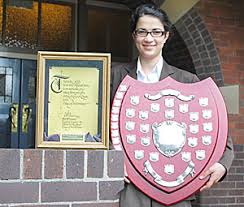 Public Speaking Activities
 Public Speaking Activities
 Public Speaking Activities
 Public Speaking Activities
 Public Speaking Activities
 Public Speaking Activities
 Public Speaking Activities
 Public Speaking Activities
 Public Speaking Activities
 Public Speaking Activities
 Public Speaking Activities
 Public Speaking Activities
 Public Speaking Activities
 Public Speaking Activities

Public speaking is the process of speaking to a group of people in a structured, deliberate manner intended to inform, influence, or entertain the listeners. It is closely allied to "presenting", although the latter has more of a commercial advertisement connotation .
Early training in public speaking took place in ancient Egypt.[3] The first known Greek work[specify] on oratory, written over 2000 years ago, elaborated principles drawn from the practices and experience of orators in the ancient Greek city-states. In classical Greece and Rome, the main component was rhetoric (that is, composition and delivery of speeches), and was an important skill in public and private life. Aristotle and Quintilian discussed oratory, and the subject, with definitive rules and models, was emphasised as a part of a liberal arts education during the Middle Ages and Renaissance.
The art of public speaking was first developed[citation needed] by the ancient Greeks. Greek oration is known from the works of classical antiquity. Greek orators spoke, on their own behalf rather as representatives of either a client or a constituency, and so any citizen who wished to succeed in court, in politics, or in social life had to learn techniques of public speaking. These skills were taught first by a group of self-styled "sophists" who were known to charge fees, to "make the weaker argument the stronger," and to make their students "better" through instruction in excellence. Plato, Aristotle, and Socrates all developed theories of public speaking in opposition to the Sophists, and their ideas took on institutional form through the development of permanent schools where public speaking was taught. Though Greece eventually lost political sovereignty, the Greek culture of training in public speaking was adopted virtually wholesale by the Romans.
With the political rise of the Roman Republic, Roman orators copied and modified Greek techniques of public speaking. Under Roman influence, instruction in rhetoric developed into a full curriculum including instruction in grammar (study of the poets), preliminary exercises (progymnasmata), and preparation of public speeches (declamation) in both forensic and deliberative genres. The Latin style was heavily influenced by Cicero, and involved a strong emphasis on a broad education in all areas of humanistic study (in the liberal arts, including philosophy), as well as on the use of wit and humor, on appeal to the listener's emotions, and on digressions (often used to explore general themes related to the specific topic of the speech). Oratory in the Roman empire, though less central to political life than in the days of the Republic, remained important in law, and became (under the second Sophistic) an important form of entertainment, with famous orators or declaimers gaining great wealth and prestige for their skills.
Public Speaking Activities

No comments:
Post a Comment