Public Speaking Nervousness
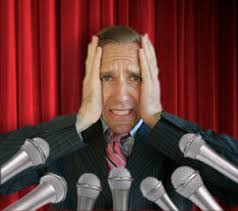
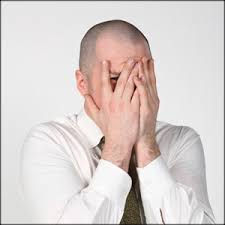
The more specific symptoms of speech anxiety can be grouped into three categories: physical, verbal, and non-verbal. Physical symptoms result from the sympathetic part of the autonomic nervous system (ANS) responding to the situation with a "fight-or-flight" reaction. Since the modus operandi, or method of operating, of the symphatetic system is all-or-nothing, adrenaline secretion produces a wide array of symptoms at once - all of which are supposed to enhance your ability to fight or escape a dangerous scenario.[original research?] These symptoms include acute hearing, increased heart rate, increased blood pressure, dilated pupils, increased perspiration, increased oxygen intake, stiffening of neck/upper back muscles, and dry mouth.[original research?] Some of these may be alleviated by drugs such as beta-blockers, which bind to the adrenalin receptors of the heart, for example.[original research?] The verbal symptoms include, but are not limited to a tense voice, a quivering voice, and vocalized pauses—which tend to comfort anxious speakers.[original research?] One form of speech anxiety is dysfunctional speech anxiety, in which the intensity of the fight-or-flight response prevents an individual from performing effectively.[original research?]
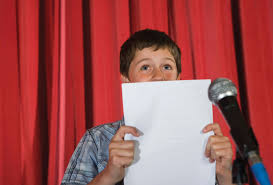
Many people report stress-induced speech disorders which are only present during public speech. Some glossophobics have been able to dance, perform in public, or even to speak (such as in a play) or sing if they cannot see the audience, or if they feel that they are presenting a character or stage persona rather than themselves. Being able to blend in a group (as in a choir or band) can also alleviate some anxiety caused by glossophobia.
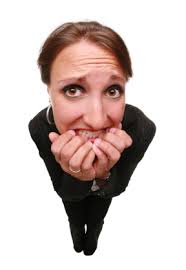
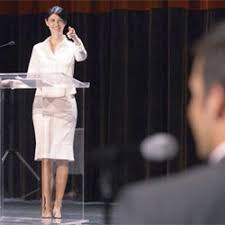
Estimated 75% of all people experience some degree of anxiety/nervousness when public speaking.[3]
 Public Speaking Nervousness
 Public Speaking Nervousness
 Public Speaking Nervousness
 Public Speaking Nervousness
 Public Speaking Nervousness
 Public Speaking Nervousness
 Public Speaking Nervousness
 Public Speaking Nervousness
 Public Speaking Nervousness
 Public Speaking Nervousness
 Public Speaking Nervousness
 Public Speaking Nervousness
 Public Speaking Nervousness
 Public Speaking Nervousness
 Public Speaking Nervousness
 Public Speaking Nervousness
 Public Speaking Nervousness
 Public Speaking Nervousness
 Public Speaking Nervousness

The more specific symptoms of speech anxiety can be grouped into three categories: physical, verbal, and non-verbal. Physical symptoms result from the sympathetic part of the autonomic nervous system (ANS) responding to the situation with a "fight-or-flight" reaction. Since the modus operandi, or method of operating, of the symphatetic system is all-or-nothing, adrenaline secretion produces a wide array of symptoms at once - all of which are supposed to enhance your ability to fight or escape a dangerous scenario.[original research?] These symptoms include acute hearing, increased heart rate, increased blood pressure, dilated pupils, increased perspiration, increased oxygen intake, stiffening of neck/upper back muscles, and dry mouth.[original research?] Some of these may be alleviated by drugs such as beta-blockers, which bind to the adrenalin receptors of the heart, for example.[original research?] The verbal symptoms include, but are not limited to a tense voice, a quivering voice, and vocalized pauses—which tend to comfort anxious speakers.[original research?] One form of speech anxiety is dysfunctional speech anxiety, in which the intensity of the fight-or-flight response prevents an individual from performing effectively.[original research?]
Many people report stress-induced speech disorders which are only present during public speech. Some glossophobics have been able to dance, perform in public, or even to speak (such as in a play) or sing if they cannot see the audience, or if they feel that they are presenting a character or stage persona rather than themselves. Being able to blend in a group (as in a choir or band) can also alleviate some anxiety caused by glossophobia.
Estimated 75% of all people experience some degree of anxiety/nervousness when public speaking.[3]
Public Speaking Nervousness

No comments:
Post a Comment