Saturday, 19 January 2013

How To Public Speaking

How To Public Speaking
Do you dread public speaking? Join the club. Along with death and spiders, it’s what people fear most. However, being an effective presenter is critical for anyone who is (or aspires to be) in a leadership position. In fact, certain presentations can be downright career defining.
Instead of leaving your speaking success to chance, take some cues from the pros.
Begin with the end in mind.  Before you start working on your script or presentation, get clear on its purpose. What are you trying to accomplish? What impact do you want to have on your audience? Are you looking to inform? Inspire? Persuade? Knowing your ultimate purpose and desired outcome will help you stay focused through the preparation process.
Simplify your messages.  You are where you are because of the depth and breadth of your expertise. Your natural inclination will be to impart lots of that knowledge onto your audience. Resist it! Otherwise, you’ll bore and overwhelm your listeners with details they’ll never retain. Focus on conveying a few powerful ideas that they’ll remember. Think of yourself as Master Distiller of Information – boil it down and go from there.
How To Public Speaking
 How To Public Speaking

 How To Public Speaking
 How To Public Speaking 
 How To Public Speaking 
 How To Public Speaking
 How To Public Speaking
 How To Public Speaking

 How To Public Speaking
 How To Public Speaking
 How To Public Speaking

 How To Public Speaking 
 How To Public Speaking

 How To Public Speaking
 How To Public Speaking
 How To Public Speaking
 How To Public Speaking
 How To Public Speaking

 How To Public Speaking
 How To Public Speaking

Mastering Public Speaking

Mastering Public Speaking
Mastering Public Speaking equips students with a firm grounding in the “hows” and “whys” of public speaking by providing an ideal balance of theory and skills while placing important emphases on critiquing, ethics, and critical thinking.
Written in a casual, lively style and clearly organized, the Eighth Edition of Mastering Public Speaking builds on its previous success. The first public speaking book to devote an entire chapter to ethics, the Eighth Edition continues its popular and distinctive emphasis on the ethical contract between speaker and listener.
Teaching & Learning Experience
Personalize Learning—MySpeechLab delivers proven results in helping students succeed, provides engaging experiences that personalize learning, and comes from a trusted partner with educational expertise and a deep commitment to helping students and instructors achieve their goals. With tools such as MediaShare (our video upload and commenting tool), MyOutline, and self-assessments in MyPersonalityProfile, MySpeechLab works with students and instructors to personalize the learning experience and make it more effective.
Improve Skill Development and Application— “Key Points” boxes, chapter outlines, marginal glossary entries, and bulleted chapter summaries reinforce instruction and aid student review. “Theory into Practice” (TIP) features in every chapter help students understand and apply concepts and strategies of public communication to enhance their speaking competence.
Engage Students— “Speaking with Confidence” features throughout the Eighth Edition have students explain in their own words how various aspects of the speech process help build confidence.  Furthermore, the Eighth Edition of Mastering Public Speaking is more streamlined and user-friendly, has more bulleted lists and new bulleted summaries that make it easier for you to find the chapter content you are looking for, and is formatted in a smaller trim size that makes it easier to carry and use in class. 

Mastering Public Speaking
 Mastering Public Speaking
 Mastering Public Speaking
 Mastering Public Speaking
 Mastering Public Speaking
 Mastering Public Speaking
 Mastering Public Speaking
 Mastering Public Speaking
 Mastering Public Speaking
 Mastering Public Speaking
 Mastering Public Speaking
 Mastering Public Speaking
 Mastering Public Speaking
 Mastering Public Speaking
 Mastering Public Speaking
 Mastering Public Speaking
 Mastering Public Speaking
 Mastering Public Speaking
 Mastering Public Speaking
 Mastering Public Speaking

Public Speaking Workshop

Public Speaking Workshop
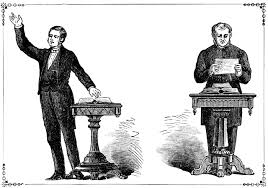
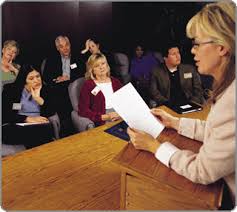
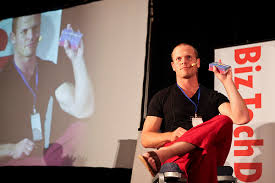
Public speaking is the process of speaking to a group of people in a structured, deliberate manner intended to inform, influence, or entertain the listeners. It is closely allied to "presenting", although the latter has more of a commercial advertisement connotation .
With the political rise of the Roman Republic, Roman orators copied and modified Greek techniques of public speaking. Under Roman influence, instruction in rhetoric developed into a full curriculum including instruction in grammar (study of the poets), preliminary exercises (progymnasmata), and preparation of public speeches (declamation) in both forensic and deliberative genres. The Latin style was heavily influenced by Cicero, and involved a strong emphasis on a broad education in all areas of humanistic study (in the liberal arts, including philosophy), as well as on the use of wit and humor, on appeal to the listener's emotions, and on digressions (often used to explore general themes related to the specific topic of the speech). Oratory in the Roman empire, though less central to political life than in the days of the Republic, remained important in law, and became (under the second Sophistic) an important form of entertainment, with famous orators or declaimers gaining great wealth and prestige for their skills.
This Latin style was the primary form of oration in the world until the beginning of the 20th century. After World War II there began a gradual deprecation of the Latin style of oration. With the rise of the scientific method and the emphasis on a "plain" style of speaking and writing, even formal oratory has become less polished and ornate than in the Classical period, though politicians today can still make or break their careers on the basis of a successful (or unsuccessful) speech. Abraham Lincoln, Adolf Hitler, Marcus Garvey, John F. Kennedy, and Bill Clinton all advanced their careers in large part due to their skills in oratory.[citation needed]

Public Speaking Workshop
 Public Speaking Workshop
 Public Speaking Workshop
 Public Speaking Workshop
 Public Speaking Workshop
 Public Speaking Workshop
 Public Speaking Workshop
 Public Speaking Workshop
 Public Speaking Workshop
 Public Speaking Workshop
 Public Speaking Workshop 
 Public Speaking Workshop 
 Public Speaking Workshop
 Public Speaking Workshop 
 Public Speaking Workshop
 Public Speaking Workshop
 Public Speaking Workshop
 Public Speaking Workshop
 Public Speaking Workshop
 Public Speaking Workshop